We killed
the
portfolio.
Every outbound call at Prestige lived inside a portfolio — each one built and tracked by hand, rebuilt every day and every month. It buried the team in busywork and hid whether anyone was actually moving accounts. So we tore out the model and replaced it with one data-driven queue that just tells each agent what to do next. We called it Service Center.
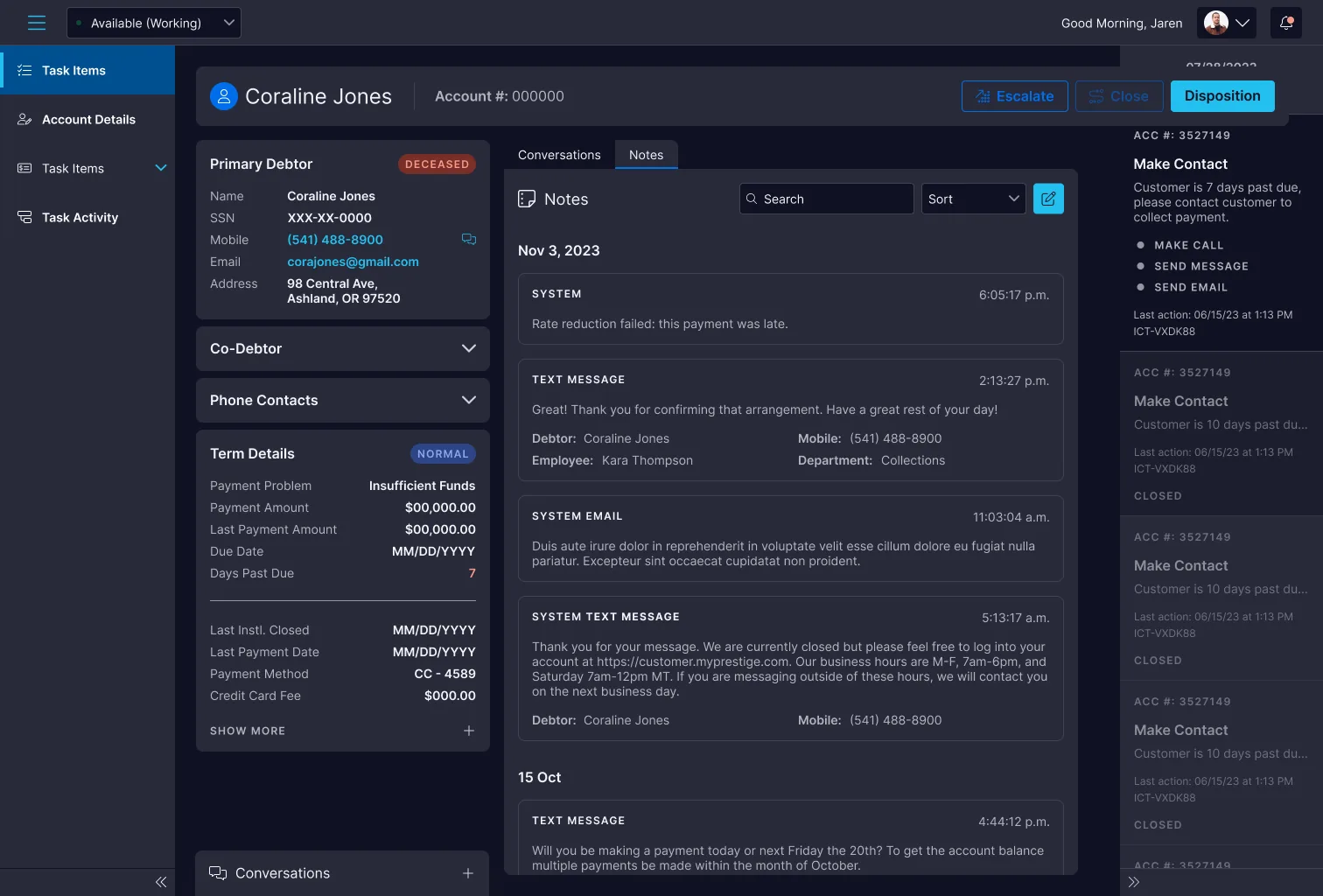
Everything was sorted into portfolios — created by hand, tracked by hand, rebuilt every day and every month. Following up on debt meant tremendous, repetitive work, and spreading it fairly across the team was guesswork. Management had no real way to see whether an agent was on task or coasting. And the metrics we rewarded quietly incentivized the wrong thing — behavior that protected the agent's paycheck, not the health of the business.
One queue.
Fed by data.
We did away with portfolios entirely. A data-driven engine feeds a single task queue and keeps feeding it — every task tells the agent exactly what the account needs next.
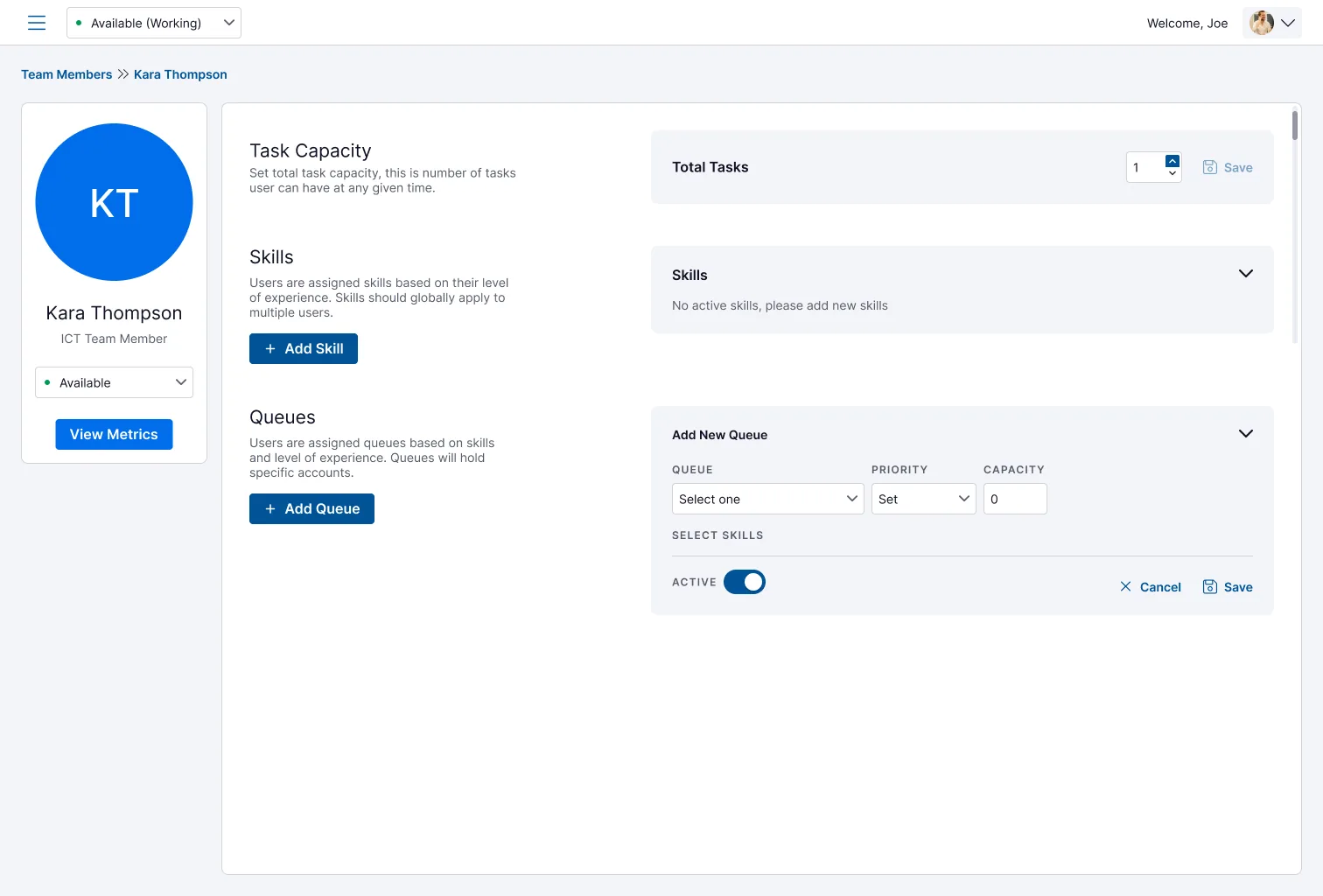
Queues and skills give managers the controls: route the specialized accounts to the agents trained for them, and let everyone else pull from the general flow.
Watch the
work route
itself.
Accounts stream in. The engine sorts them into the queue, then routes each task to an agent whose skills match — specialists get the specialist work, the rest flows to whoever's open. No one builds a portfolio. No one runs dry.
From drowning
to 12,000
a day.
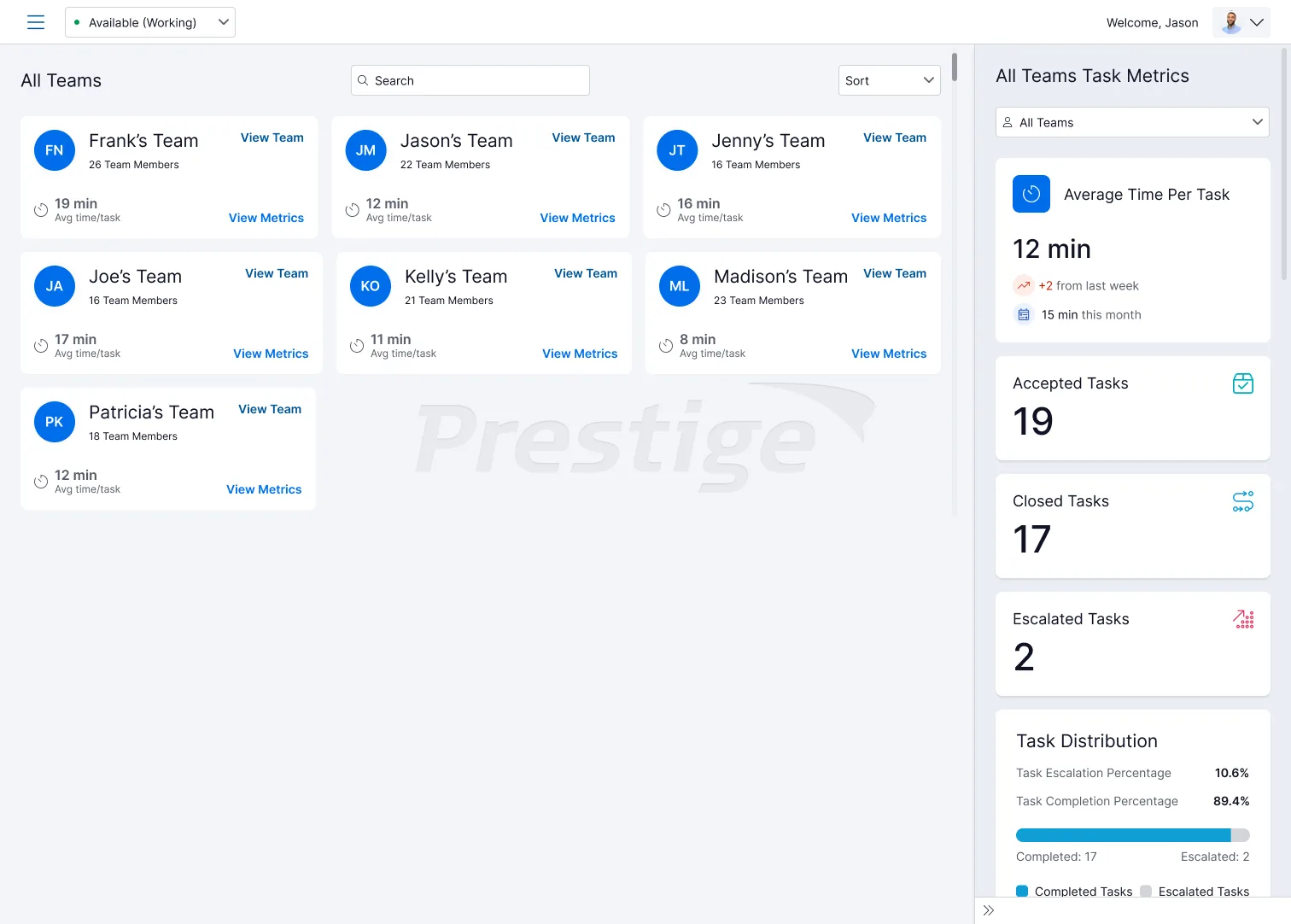
The team went from never clearing a day's queue to making multiple contacts on every account, every day — over 12,000 tasks. And because the work was tracked end to end, managers could finally coach on something real: not just who was online, but who was moving accounts forward, and where to step in.
Good systems make
the right thing
the easy thing.
Service Center didn't make anyone work harder — it made the next right move obvious, and let managers spend their attention on people instead of spreadsheets. That's the kind of leverage I like to build.
I was the manager on this one — I set the vision and direction, and this team designed and built it. It's work we're all proud of.